

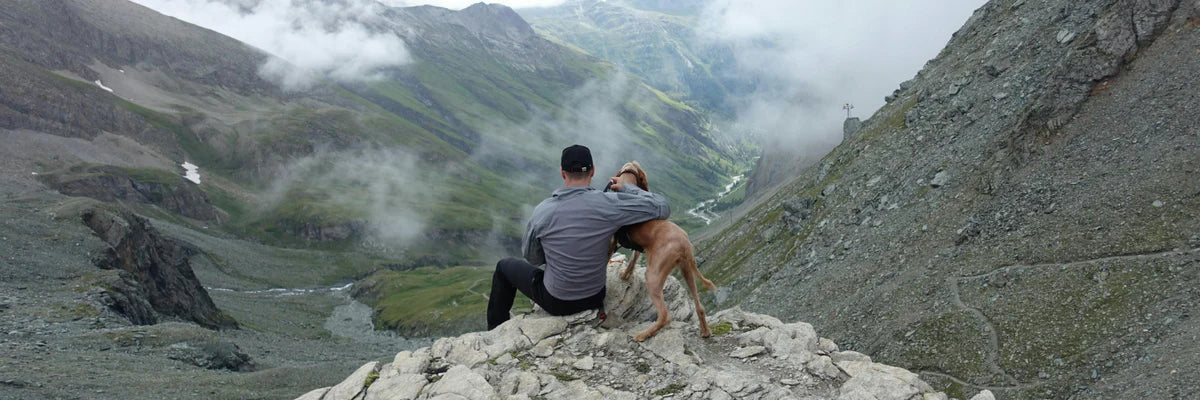
Best Dog Harnesses for Hiking: Loved by European Dog Owners
Hiking with your pup is great exercise and with the right gear, it can be safe, fun and a great bonding experience. The right harnesses keep pressure off your dog's neck, give you confident handling, and stay comfortable whatever the distance.
Below are four EzyDog harness options picked for European trails, chosen for control, comfort, and easy fit. You can also browse our whole range of Dog Harnesses here.
1. X-Link No-Pull Harness
The X-Link harness is designed for dual functionality, which makes it a strong contender for hiking routes where conditions change. You can switch between the back clip for casual walking and front clip for better control on inclines or tricky terrain. This flexibility is especially helpful for dogs that vary their pulling behaviour depending on the path. Its durable hardware and rugged build also stand up well to mud, brush, and wetter environments found across European trails.
Best for: Dogs that need front-clip no-pull control on steep hikes and a back clip for relaxed trail walking.

2. Express Harness
The Express harness works well on hikes where lightweight and quick application are key. Its padding helps buffer the dog's chest during repetitive motion, and the quick-fit design ensures you can clip on fast when you need to get moving or adjust on the go. For hikes that include stops, streams, or sudden pace changes, Express gives you the convenience and comfort you need.
Best for: Hikers who need a lightweight, easy-on harness for quick transitions and comfortable all-day wear.

3. Chest Plate Harness
On narrow ridges, steep declines, or bushy trails, the Chest Plate harness won't disappoint. Its contoured EVA foam chest plate helps the harness hold its shape and resist twisting, so your dog remains secure. The design also allows for better chest coverage and protection against awkward branches. Reflective stitching helps visibility on longer dark evenings, and the sturdy build handles strenuous hikes without sacrificing comfort.
Best for: Dogs that need a secure hiking harness with added chest protection on rough terrain.

4. Crosscheck Harness
If your dog is working on their hiking manners, the Crosscheck harness gives you a lightweight training tool on the trails. As a figure-8 style "limited slip" harness, it gives a gentle correction when your dog pulls, helping discourage bad habits over time. Because it's minimal in structure, it doesn't impede movement, important when navigating rocks or narrow footpaths. Use it in tandem with patient training, especially on multi-hour hikes.
Best for: Training dogs on hikes who pull, a lightweight no-pull hiking harness that encourages polite walking.

How to Choose a Hiking Harness (Quick, Practical)
Keep it simple: you're looking for a stable fit, easy control, and all-day comfort.
- Fit that doesn't budge: multiple adjustment points stop the harness twisting when your dog changes direction.
- Control where you need it: a front clip (built-in or via the UpFront D-Ring) gives gentle steering on narrow paths; a back clip is relaxed for wider tracks.
- Comfort for miles: padded contact zones, a non-restrictive Y-front, and reflective accents for low-light valleys and winter afternoons.
- Pair your harness with trail-friendly leashes: Road Runner Leash for hands-free sections, or a Zero Shock Leash to soften sudden pulls on descents.
Measuring, Fitting & Staying Safe on European Trails
A good fit is half the battle. Measure chest girth at the widest point behind the front legs; pick the size where that measurement sits mid-range on the chart. Adjust each strap evenly and aim for a snug two-finger gap under every strap. Re-check after coat or weight changes.
A few Europe-specific notes:
- Use leashes around livestock and on signed stretches; give wildlife and other walkers space.
- Add ID and reflective touches; weather and light can change quickly across European mountain and coastal trails.
- Bring water and a rest plan — dogs overheat faster than we do, even on windy days.
Common Concerns from European Dog Owners
Are hiking harnesses different from walking harnesses?
They're built with the same comfort principles, but hiking picks tend to prioritise stability, grab-handles, and durable materials that cope with mud and kit rubbing. Many owners happily use one well-fitted harness for both city and trail, just look for the features above.
Should a hiking harness have a handle?
It's not mandatory, but a handle is extremely useful for helping your dog over obstacles, lifting into a car boot, or steadying them on steep rock steps. Look for harnesses with a built-in top handle if you want that planted feel plus added security.
Will a harness stop pulling on its own?
Think of it as power steering. A front-clip or dual-clip design makes neat leash manners much easier to teach, but progress comes from short, positive sessions and consistency on every walk.
Insights & Tips from European Dog Owners
Hiking across Europe means a mix of mountain paths, coastal trails, forest tracks, and quick weather shifts — so little tweaks make a big difference.
- Use front-clip on narrow paths. When the trail pinches or you're passing other walkers, clip to the chest ring (or fit the UpFront D-Ring) for gentle steering and tidier heelwork. Switch back to the top ring on wider tracks.
- Handles are worth their weight. A back handle is brilliant for steadying on rock steps and guiding into the car boot without grabbing a collar.
- Hands-free on steady sections. A Road Runner style leash keeps your arm relaxed and your footing balanced on long inclines. Swap to a standard leash for technical ground.
- Layer smart in wet weather. If your dog wears a lightweight coat, fit the harness under the shell (if the coat allows harness access) so straps don't rub when soaked.
- Do quick "field checks". Every water stop, run fingers under the chest/shoulder straps, check for grit under the harness, and re-snug after a big shake.
- End-of-walk routine. Rinse mud off contact areas, pat dry, and check paws (thorns, grit between toes). A 30-second once-over prevents next-day rubs.
- Trail etiquette. Keep your dog close around livestock and ground-nesting birds; follow local signage and give everyone plenty of space on popular routes.
Common Mistakes to Avoid
- Relying on a back-clip only with pullers. On exciting trails it can power dogs forward. Fix: Use a front-clip or dual-clip setup for steering on tight sections.
- Loose or drifting fit. Straps "bed in" and coats flatten on the move. Fix: Re-check tension after 10 minutes and after any big shake; aim for a snug two-finger gap under each strap.
- Retractable leashes on single-track. They tangle on brambles and trip walkers. Fix: Use a fixed-length leash; keep it short and relaxed by your side when the path narrows.
- Not adjusting for seasons. A winter coat or summer clip changes fit. Fix: Re-measure girth when coat thickness changes and tweak strap lengths accordingly.
- Ignoring small comfort cues. Head-tilts, persistent scratching, or a harness that creeps up towards the throat are all signals. Fix: Pause, readjust, remove grit, and only then carry on.
- Forgetting visibility. Dusk comes quickly in the hills. Fix: Reflective trim (and a small clip-on light) makes a real difference on the walk out.
Final Thoughts
For hiking across Europe, pick a harness that fits securely, gives confident handling, and stays comfortable on long outings — add a front clip (built-in or with UpFront D-Ring) if you want extra control on narrow paths.
Our cheat sheet: Use the X-Link for very strong or large dogs; Express for lightweight, everyday adventures; Chest Plate if you want cushioned stability; Crosscheck for gentle training correction on the trail.
Read more


Leave a comment
This site is protected by hCaptcha and the hCaptcha Privacy Policy and Terms of Service apply.